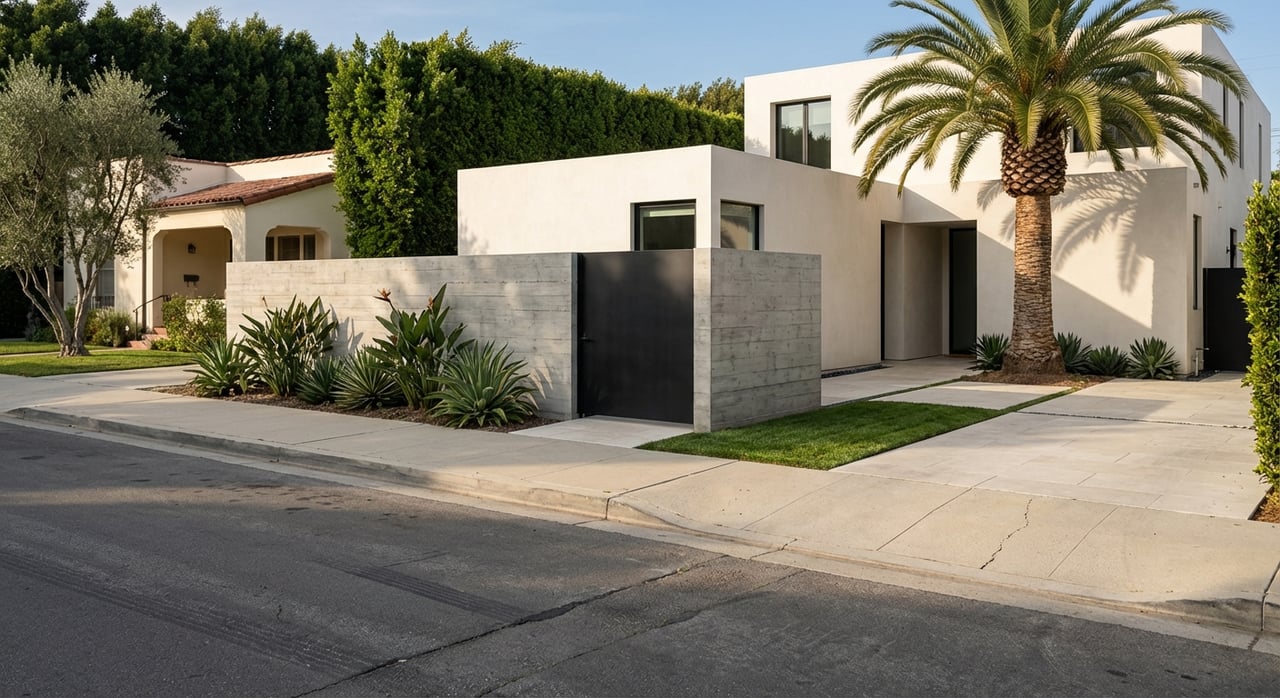
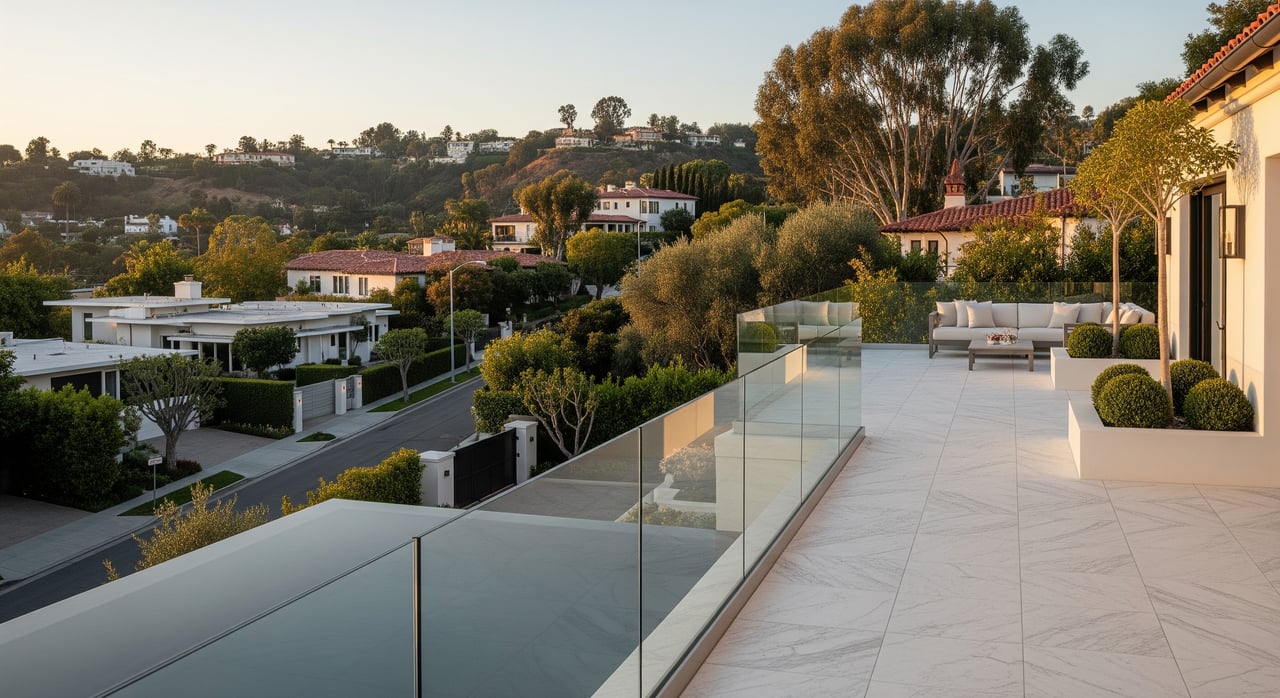
Two vacant parcels can sit three blocks apart in the Palisades right now, both marked "cleared," both priced by the square foot, both photographed with the same drone-shot ocean sliver in the corner of the frame. One of them can break ground in a matter of weeks once permits are pulled. The other needs sign-off from LADBS's Grading Division and two to four extra months before a shovel touches the dirt. Nothing on the listing sheet tells you which one you're bidding on.
That distinction has a name: the Palisades Geohazard Risk Assessment Zone, or PGRAZ. It is one of several parcel-specific conditions that determine whether a rebuild lot behaves like the fast, streamlined process the city has been publicizing since the fire, or like a much longer and more expensive one. For a buyer comparing lots today, the price per square foot on the listing is the least useful number in the file.
Check the clearance status
the U.S. Army Corps of Engineers reached the final opted-in private property on August 26, 2025, having removed more than one million tons of debris from roughly 4,010 Palisades properties through the government-run program. Homeowners who opted out and hired private contractors instead are at varying stages of their own clearance, and that status doesn't always show up cleanly in public records.
If you're evaluating a lot, ask for the clearance letter directly.
PGRAZ: the zoning line that doesn't show up in photos
LADBS created the PGRAZ map after the fire specifically to flag lots that need extra geological review before permits issue. It splits the fire area into two categories. Orange zones sit on or next to steep slopes, or in potential landslide areas. Yellow zones sit at the base of those slopes, where mudslide debris could travel. Outside those zones, a soils report may still be required. Inside them, a combined geology and soils report has to be approved by the LADBS Grading Division before a permit can be issued at all.
The practical difference between the two categories is not small.
| Outside PGRAZ | Inside PGRAZ (orange or yellow) | |
|---|---|---|
| Soils report required | In some cases | Always, combined with a geology report |
| Typical added cost | Minimal to none | Roughly $15,000 to $50,000 or more |
| Typical added timeline | None | 8 to 16 weeks or more before permits can issue |
| Foundation implications | Conventional footings usually sufficient | May require caissons, drilled piers, or engineered retaining systems |
Alphabet Streets parcels tend to sit on flatter ground and are less likely to fall inside a PGRAZ boundary. Hillside neighborhoods like the Highlands, Castellammare, and Marquez Knolls carry a much higher likelihood of landing in an orange or yellow zone. You can check a specific parcel against the LADBS PGRAZ map or through ZIMAS before you ever write an offer, and you should, because this single designation can change both your construction budget and your closing timeline more than the purchase price does.
What else the parcel is carrying
PGRAZ is the biggest hidden variable, but it isn't the only one. Two more conditions are worth checking on any Palisades lot:
- Protected trees. Oaks, sycamores, black walnuts, and bay laurels are protected under Los Angeles Municipal Code Section 46.00. Removal of certain trees can add months to a timeline that otherwise looks fast on paper.
- Coastal Zone jurisdiction. A meaningful share of Palisades parcels fall inside the California Coastal Zone, which adds a review layer most Los Angeles rebuilds never encounter. Whether a specific lot is inside that boundary is a field you can check on ZIMAS, and it directly affects the next point.
The 110% line
According to Built to Perfection, under the emergency executive orders issued after the fire, a rebuild that stays within 110% of the original home's size qualifies for an exemption from a Coastal Development Permit. That exemption is what allows most like-for-like rebuilds to move at the accelerated pace the city has publicized. Projects that exceed 110% of the original home's size lose that automatic exemption.
This matters for a buyer because the decision isn't purely architectural. It's a financing and timeline decision made in the first weeks of ownership. A buyer who plans to expand meaningfully beyond the original home's documented size should expect a longer coastal review process than the headline permit numbers suggest, and should budget financing contingencies accordingly.
The gap between permits issued and homes finished
The city's permitting numbers have been genuinely fast relative to pre-fire timelines, and that part of the story is real. What gets lost is the gap between a permit being issued and a home actually being occupied. The first Certificate of Occupancy in the Palisades was issued on November 21, 2025, for a home at 915 N Kagawa Street built by Thomas James Homes, roughly six months after the rebuild began. The most recent public rebuild dashboard figures, published in late May 2026 through the Palisadian-Post's tracking project, showed roughly 928 rebuild permits issued against just 15 homes that had reached a Certificate of Occupancy.
That gap isn't a sign that the process is failing. It's a sign that permit issuance and home completion are two different bottlenecks, governed by two different sets of constraints. Permits move fast because of the executive orders cutting review time. Completions move at the pace of geotechnical work, contractor availability, and inspection scheduling, none of which the permit count reflects. A buyer reading only the permit headline gets an optimistic picture. A buyer who checks their specific lot's PGRAZ status and clearance file gets the picture that actually applies to their project.
Before you write the offer
A short sequence, in the order it actually matters:
- Request the debris clearance letter for the specific parcel, not a general statement that the neighborhood has been cleared.
- Check the lot's PGRAZ status through ZIMAS or the LADBS map, and if it falls in an orange or yellow zone, get a geotechnical cost estimate before you finalize your offer price.
- Confirm whether the parcel sits inside the Coastal Zone and what that means for your specific rebuild plans, especially if you intend to exceed the original home's footprint.
- Ask whether protected trees exist on or near the site, and whether any prior owner already commissioned a Tree Report.
- Build financing contingencies around the geotechnical and coastal review timelines, not around the citywide permit-speed numbers you've seen in the news.
None of these steps are visible in a standard listing. They live in city bulletins, parcel maps, and clearance files, and the only way to see them clearly is to go look before you're under contract, not after.
FAQ
What is PGRAZ, and how do I check if a specific lot is in one? PGRAZ stands for Palisades Geohazard Risk Assessment Zone, a designation LADBS created after the fire to flag parcels needing combined geology and soils review before a permit can issue. You can check a specific address against the official LADBS PGRAZ map or through ZIMAS.
Does a lower price per square foot mean a lot is a better deal? Not on its own. A cheaper hillside lot in a PGRAZ zone can end up costing more once geotechnical investigation, engineered foundations, and added timeline are factored in. Price per square foot without a PGRAZ check is an incomplete number.
What happens if my planned rebuild exceeds 110% of the original home's size? It generally loses the automatic exemption from a Coastal Development Permit.
Do I need a geotechnical report if my lot isn't in a PGRAZ zone? It depends on the parcel and the work involved.
Buying a rebuild lot in the Palisades rewards the buyer who checks the parcel-level details before the offer, not after. If you're comparing specific lots and want a second set of eyes on what a given parcel is actually carrying, Gina Martino works this market directly and can help you read a listing for what it doesn't say. Receive Exclusive Off-Market Listings to see Palisades opportunities before they're widely marketed.
This article is general information, not legal, tax or financial advice. Consult a qualified professional about your situation.